
Healthcare innovation is increasingly shaped by technology. Artificial intelligence, robotics and automation are helping healthcare providers work more efficiently in a system facing rising demand and persistent staff shortages. Yet for companies developing these technologies, innovation does not happen behind a laptop alone.
For Jim Lelivelt, Chief Financial Officer at Vitestro, the future of healthcare innovation remains closely connected to the physical workplace.
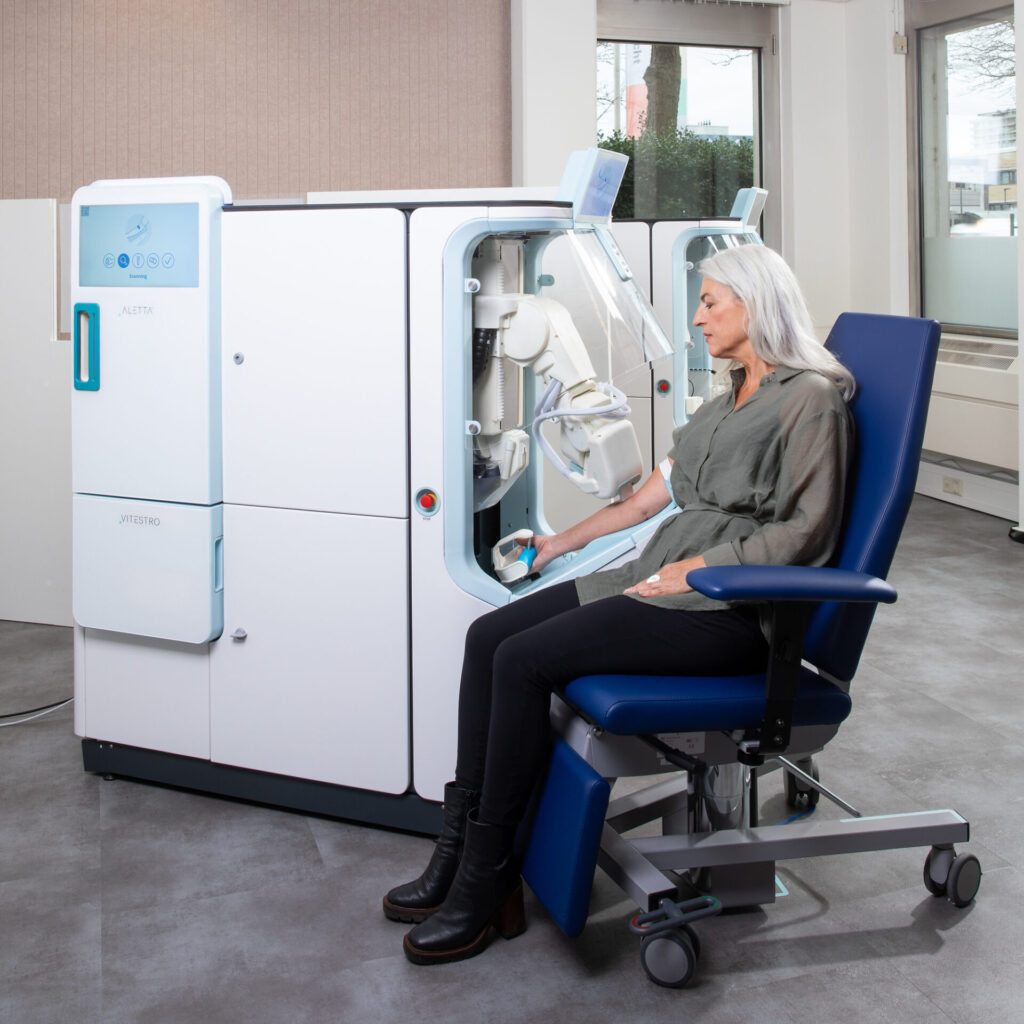
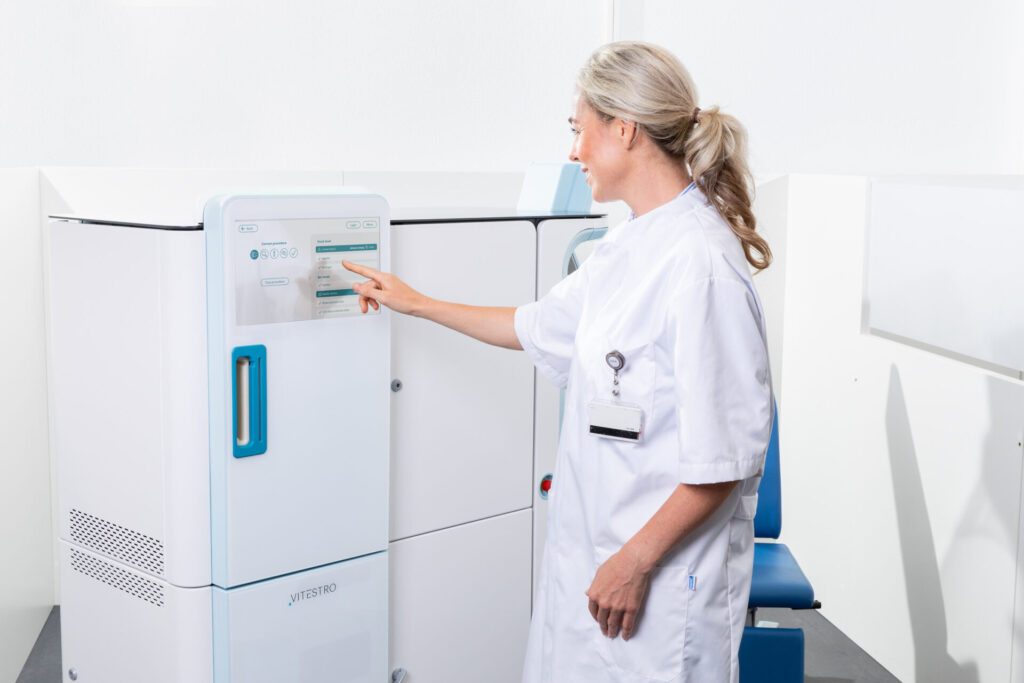
Vitestro, a Dutch medtech scale-up based in Utrecht, developed Aletta®, the world’s first Autonomous Robotic Phlebotomy Device™. Aletta automates diagnostic blood collection and combines advanced robotics, artificial intelligence and imaging technology to identify a suitable vein and perform routine blood draws autonomously.
Nine years after its founding, Vitestro has grown to around 110 employees and is preparing for further commercial expansion in Europe and the United States. That growth changes what the company needs from its working environment: more room, better integration and a larger home base that brings production, R&D and office teams closer together.
Growth changes the workplace
When Lelivelt joined Vitestro almost five years ago, the company employed around thirty people, most of them R&D engineers. Today, the organisation has evolved far beyond a pure technology company. Software and hardware engineers remain central to the business, but commercial, operations, production, clinical teams, quality and regulatory specialists, HR, finance, strategy and legal have all become integral parts of the organisation.
As companies grow, their workplace requirements become more complex. Vitestro currently operates from several floors within a start-up hub in Utrecht. That set-up offered the flexibility the company needed in its early years. As new space became available, Vitestro was able to expand step by step without having to move. But growth also creates a need for more coherence.
“We are now reaching the point where we need a larger facility that matches our needs,” says Lelivelt. “A space that allows us to grow further without depending on space becoming available .”
For a company developing physical medical technology, that matters. Vitestro works with a tangible product. Parts and modules arrive on site, systems are assembled, tested and calibrated, and the company works with external manufacturing partners for a large part of the production process. Engineers, operations teams and product specialists regularly need to collaborate around the same physical device. That makes the workplace fundamentally different from that of a purely digital business.
The limits of remote work
Hybrid working has become standard practice across many industries. Vitestro offers flexibility as well, but Lelivelt sees clear limits to what can be done remotely.
“You cannot always work through online Teams meetings when you are developing something together,” he says. “When you are working on a physical device, it is important that people can be together in the same place.”
For Vitestro, physical presence is less about being in the office for its own sake and more about creating the right conditions for collaboration. Production teams and R&D engineers need access to the product, the workshop and each other. Larger teams also need meeting rooms that allow people on site and remote colleagues to work together effectively.
The social side matters too. Lelivelt wants to encourage people to come to the office, because being together supports the sense of community within the organisation. Especially as teams grow and become more specialised, the workplace helps people stay connected beyond their own discipline.
“When you are working on a physical device, it is important that people can be together in the same place.”
Jim Lelivelt, Vitestro
Talent drives location decisions
If there is one factor shaping Vitestro’s workplace strategy, it is talent. The company recruits internationally and employs people from across the Netherlands and beyond. Around half of the team consists of international employees, and the company looks beyond national borders for highly specialised roles in software, hardware and robotics. That makes accessibility a strategic consideration.
“What is important to us is that the location is easy to reach by car, public transport and, if you are in the city, by bicycle,” says Lelivelt.
For fast-growing healthcare technology companies, location is therefore not only an operational decision. It directly influences the ability to recruit and retain specialised people.
The value of an innovation ecosystem
The role of a campus also changes as organisations mature. According to Lelivelt, start-ups can benefit strongly from being part of an ecosystem. In the early stages, sharing knowledge, learning from peers and being part of a wider community can help a company move forward. As organisations grow, those needs evolve. Internal networks become stronger and companies become more self-sufficient.
For a scale-up like Vitestro, the most valuable connections are with organisations that are relevant to its current stage: companies of a comparable size, with similar challenges, or with a clear reason to learn from one another. “If you want to create a campus feeling, it is important to align the tenants,” Lelivelt explains. “The value depends on having companies around you that actually benefit from being part of the same ecosystem.”
That insight is important for life sciences and health campuses. Physical proximity alone is not enough. A true innovation environment depends on the right mix of organisations, shared facilities and active programming that helps people and companies connect in meaningful ways.
Designing workplaces for innovation
For healthcare innovators, the workplace is no longer simply a place to work. It is part of the innovation process itself. Companies need room to grow, access to specialised talent and facilities that support increasingly complex activities. Just as importantly, they need environments that make collaboration easier.
As healthcare challenges continue to grow, technology will play an increasingly important role in the solution. The organisations developing those technologies will depend not only on great ideas, but also on workplaces that make collaboration, testing and growth possible in practice.