
Healthcare technology is changing fast. Not only in terms of applications, but also in the type of people working on them. Whereas medtech was long driven mainly by hardware, the focus is now shifting towards software, data and AI models.
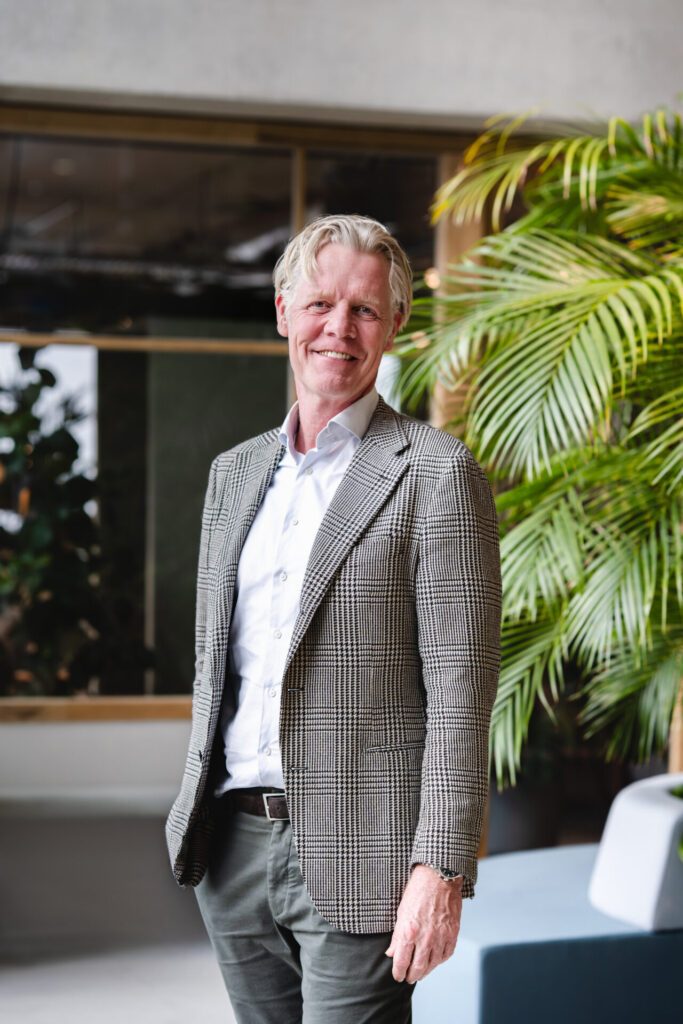
For Johan Vooren, Chief Commercial Officer at smartQare, that shift is part of everyday reality. The Eindhoven-based scale-up has eighteen employees, most of them technical developers. Within his team, he sees the change very clearly: “We’re moving from hardware-oriented talent to talent that is focused on data and AI.”
That means more programmers and data scientists, and fewer traditional hardware engineers. These are people who work with deep concentration, are technically strong and want intellectually challenging work. At the same time, they want to learn quickly and take on responsibility. That is exactly where a scale-up can make the difference.
Attracting talent is not a straightforward thing
The market for this type of professional is tight. Large technology companies are competing for the same profile. Vooren also notices that relatively fewer Dutch students are choosing these kinds of roles. International talent is becoming increasingly important.
Location plays a clear role in that. Good public transport access matters, especially for younger talent. A lively environment helps too. If a location feels too isolated, it becomes harder to persuade people to join.
At the same time, working for a scale-up is less of an obvious choice than working for a large corporate. Uncertainty and salary both come into play. Growth also depends on investors. That means organisations have to make deliberate decisions about how large they start and how much space they take.
Functionality over appearance
smartQare is based at Strijp-S in Eindhoven. Not on a dedicated life sciences campus, but in a broader, more diverse environment. That is a conscious choice. For Vooren, functionality comes first. “A modern building with up-to-date functionality is important to us.” In practice, that means good climate control, pleasant workspaces, enough meeting rooms and phone booths, and a decent kitchen area. Comfort has to be right. The working environment should make life easier, not harder.
Costs obviously matter too. That is why smartQare started with a limited number of square metres. Growth is not a given, but depends on financial room to manoeuvre. Even so, the decision is not only about price. Location influences both talent and partnerships. Over time, that becomes a major factor in the equation.
“We’re moving from hardware-oriented talent
to talent that is focused on data and AI”
Collaboration and proximity
For a scale-up, partnerships are crucial. smartQare works with larger players in healthcare technology. Many of those collaborations emerge through existing networks and regional connections. Physical proximity helps. Short lines of communication make it easier to move quickly. At the same time, a specialised campus is not necessarily essential. What matters is that the environment feels professional and supports collaboration.
smartQare works in a hybrid way, roughly three days in the office and two at home. Programming can be done perfectly well from home. But when it comes to innovation, meeting in person still matters. As Vooren puts it: “The social aspect remains very important.” For software- and AI-driven teams, that means striking a balance between open collaboration and spaces where people can withdraw to focus or take calls. A working environment needs to support both.
Innovation moves faster than organisations
Looking ahead, Vooren expects AI-driven healthcare applications to accelerate further. At the same time, he sees that organisations do not always adapt at the same pace. Technology develops rapidly. People and structures tend to move more slowly. Change is difficult and takes time. In that sense, innovation often moves faster than evolution.
That requires flexibility. Roles shift, headcount can fluctuate, and accommodation needs to move with it. Not in a grand or spectacular way, but in a practical and functional one.
For organisations in Life Sciences & Health, that raises a clear question: does your current location support the type of talent and way of working that will define the coming years? smartQare’s experience shows that real estate is not a side issue, but a concrete precondition for attracting and retaining talent.