
The Netherlands is known as a frontrunner in hybrid working. Flexibility is no longer an advantage; it has become the norm. But what happens when that freedom collides with an industry in which every lost week can quite literally make the difference between a patient receiving treatment on time or not?
Patricia Bax-Bakker, an independent workplace and real estate manager with experience at major Dutch companies and now also in Life Sciences, sees that tension play out in practice every day. “The number one priority in this sector is getting your product to market as quickly as possible,” she says. “Innovation and speed. Everything is built around that.”
Two worlds under one roof
In an R&D environment, two workplace realities effectively exist side by side. Laboratory staff have to be physically present; experiments simply cannot be run remotely. Office-based employees, meanwhile, embraced hybrid working after Covid and are reluctant to let it go. There are policies in place, often around three days a week in the office, but compliance is poor.
“You cannot accept someone saying: I can’t start an experiment on Thursday, because I’m working from home on Friday.” The tension this creates is not only organisational, but cultural too. “You end up with a kind of second-class citizen feeling. Lab staff cannot work from home for much of what they do. They have to be there.”
There is also an uncomfortable contrast. Head offices, often in the US, push hard for attendance, while not always setting the right example themselves. “That is not how you get Dutch people back into the office.” And it leaves an awkward question hanging in the air: can a country that has embraced hybrid working so fully innovate as quickly as countries where physical presence is still the norm?
Poorly designed, but difficult to change
When it comes to real estate, cost is certainly not the main priority in the life sciences sector. Innovation and employee satisfaction lead the way, with cash flow close behind. But that does not mean offices are especially luxurious or well thought through. “Office landscapes designed before Covid, with more than twenty square metres per workstation, laid out uniformly and with hardly any flexibility, are still far from unusual in this sector,” Patricia explains.
At the same time, the workforce increasingly needs a greater variety of work settings. As in other R&D environments, the proportion of introverted or neurodivergent employees is above average. “Certain roles involve a high degree of introversion. Putting those people in an open-plan office simply does not work.” Quiet focus areas, project rooms, and the ability to move easily between the lab and the office are all areas where much more can still be gained.
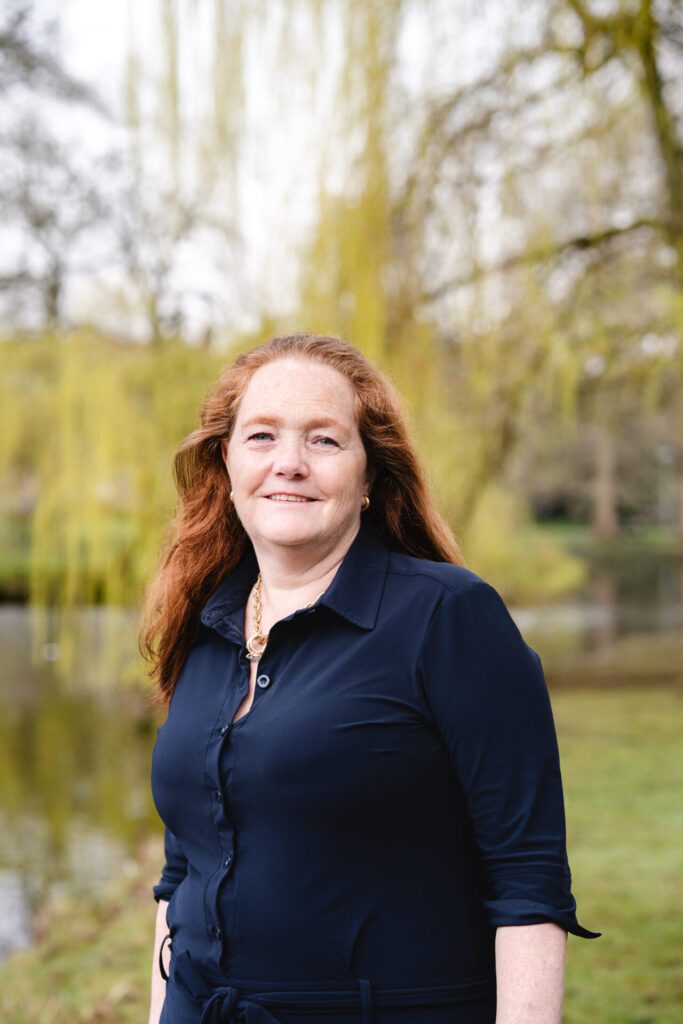
“The number one priority in this sector is getting
your product to market as quickly as possible.”
What really brings people in
Good facilities help. Subsidised lunches, excellent coffee and strong salaries mean employees in the life sciences sector are generally well looked after. Technology is a basic requirement. “If the Wi-Fi goes down, all hell breaks loose. You send people straight home.” But even that does not guarantee attendance.
The real driver is the work itself. People in life sciences are working on medicines that save or extend lives. “They are incredibly driven people. Even those who are not directly involved in the science feel connected to it. Sometimes because of personal experience with illness close to home. A family member with cancer. An illness of their own.” That intrinsic motivation is also why physical collaboration matters so much. “You need to be the first with your product. If you are three months earlier, you are the patient’s first lifeline.”
Two barriers for the future
Looking ahead, Patricia identifies two structural barriers: noise and data security. Noise drives people away from the office because it makes concentrated work impossible. Data security, meanwhile, makes it almost unthinkable to share workspace or buildings with other organisations, even though campus dynamics and cross-pollination have so much potential.
“If we can solve the noise problem and manage the security issue better, we can achieve much greater integration.” And that is exactly where the opportunity lies for a well-designed campus: not simply a collection of buildings, but an environment that takes those barriers seriously. A place where acoustics and privacy by design are built in from the start, and where shared facilities make collaboration possible without forcing organisations to give up control of their data.
Hybrid working is not the enemy in that story. “I am absolutely not in favour of everyone being in the office all the time. Hybrid working has real value.” But a campus offers something home working never can: the chance encounter with a researcher from another company, access to shared infrastructure that a smaller organisation could never build on its own, and the pull that a strong environment as a whole can have on talent.
In a sector where innovation depends on speed and patients are waiting, the workplace is not a side issue but a strategic instrument. The real question is not whether to invest in your working environment, but whether you are choosing the right one to make a difference.