
Designing the next chapter of healthcare
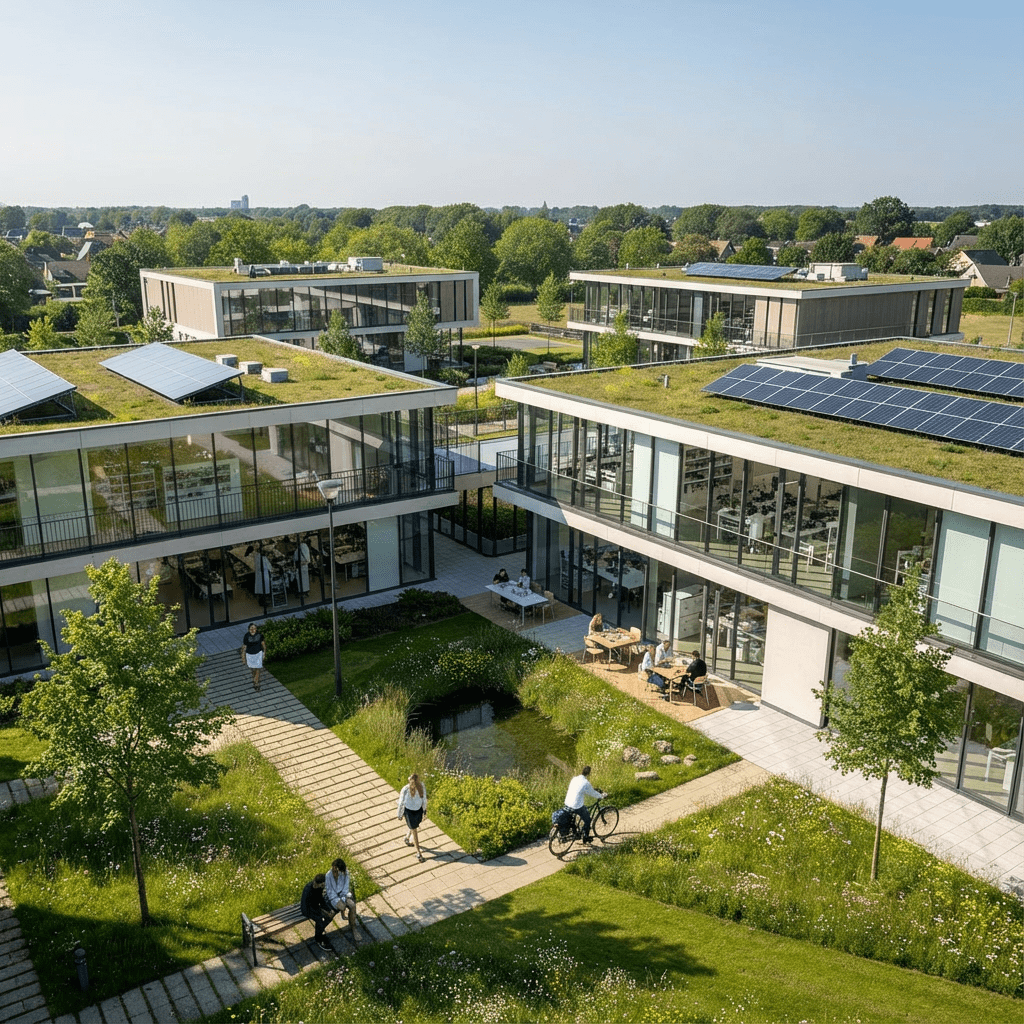
Healthcare is moving into a new era with integrated ecosystems that support stronger collaboration, a more connected community and a smoother experience for patients, researchers, and partners. This shift makes clear that thoughtful real estate thinking regarding design and flexible facilities are becoming essential ingredients for future-ready healthcare.
Our latest article explores the design and strategy shift behind this transformation. A shift that also shapes the vision for Health Innovation Campus Boxmeer.
Explore the full article on future-ready healthcare.
Ecosystem in the making
Perspectives from Lex Boon
“You build real estate to enable an ecosystem.
Buildings alone don’t bring one to life.”
Lex Boon, Business Development Director at Health Innovation Campus Boxmeer

Marriott Hotel’s natural elements
The entrance to the Health Innovation Campus Boxmeer truly breathes
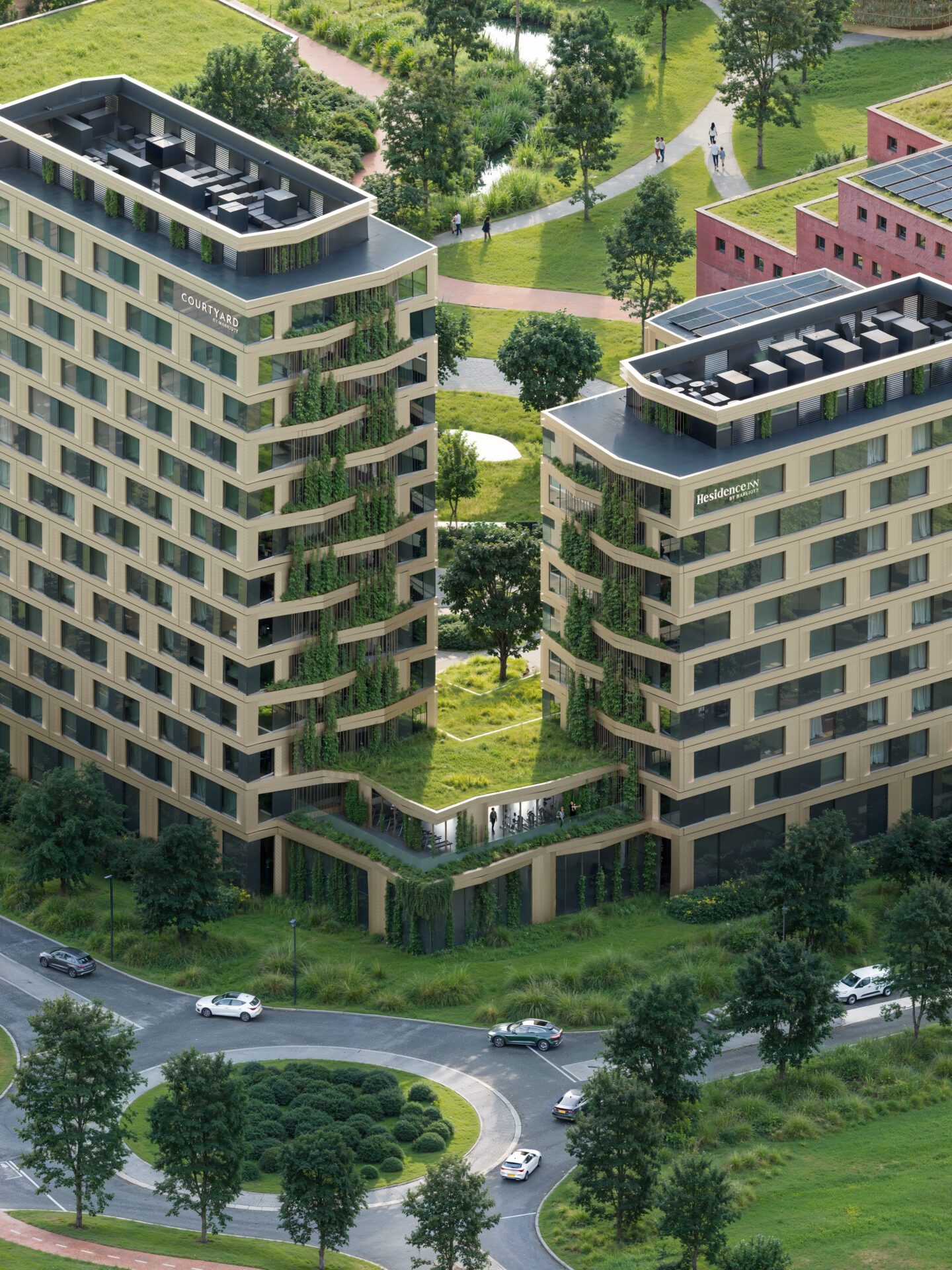
When designing a health campus, a fundamental requirement is that the whole place feels like one big healing environment. A lively and biodiverse area that physically, mentally, and socially improves people’s wellbeing. And exactly that is Necron Group’s vision for the Health Innovation Campus Boxmeer: a habitat that truly breathes.
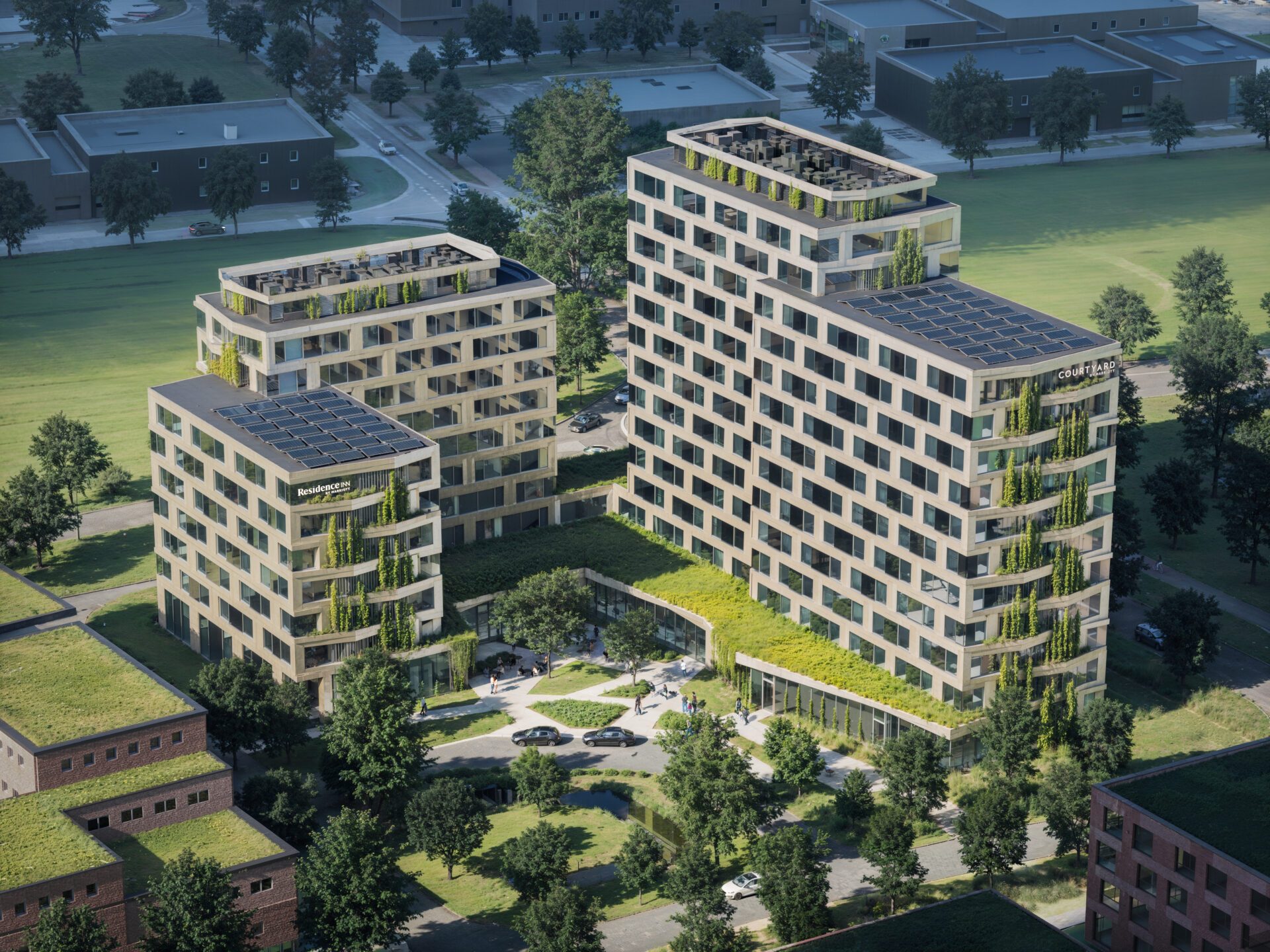
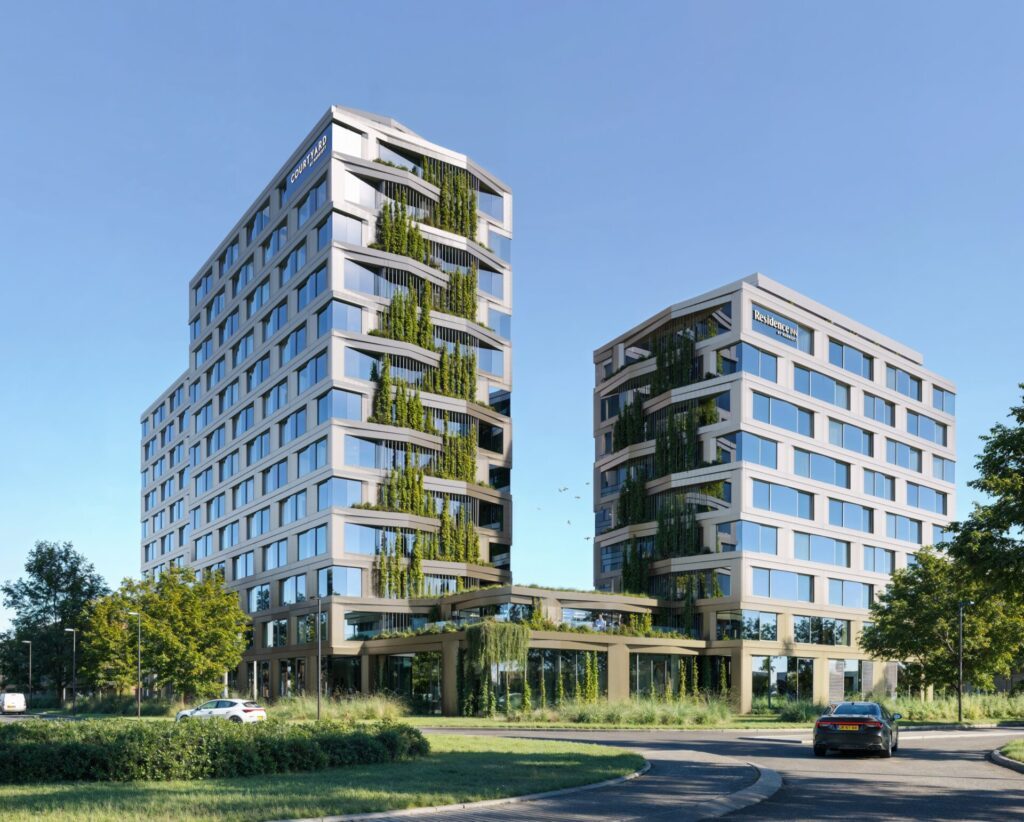
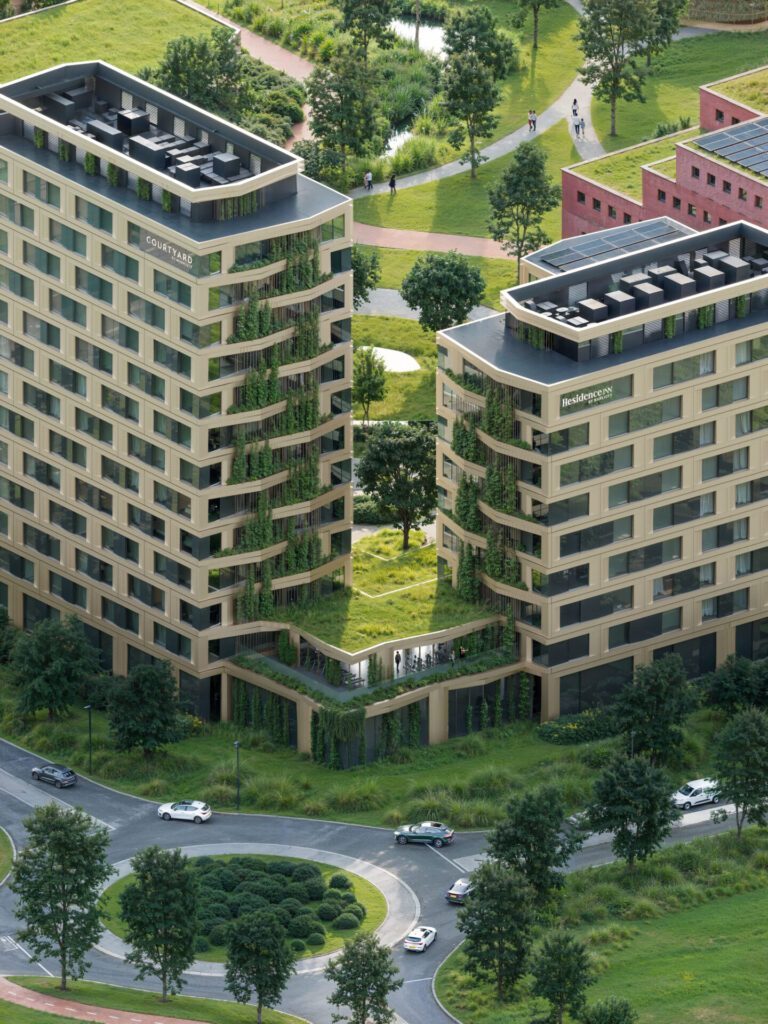
The new Marriott International Hotel has the honour of functioning as the campus’s flagship building and main entrance. With a maximum height of 45 meters, it embodies the gateway from the urban hustle outside towards the tranquil ambience inside. No surprise, the renowned architects of UNStudio came up with a fascinating approach for this highly visible landmark.
Woven facades
The architects found inspiration for the hotel design at the nearby hedges of Maasheggen. This cultural and natural heritage represents the only UNESCO Man & Biosphere area in the Netherlands. They’ve been around for a while: Julius Caesar already wrote about these sturdy hedges in ‘De Bello Gallico’ around 50 BC. He praised their tremendous strength, making it difficult for his legions to pass.
After studying the weaving technique in detail, the architects implemented several weaving patterns into the hotel design. Even though the interlacing here is done on a much larger scale and with concrete, the connection between the hotel and the natural and cultural environment is very much tangible.
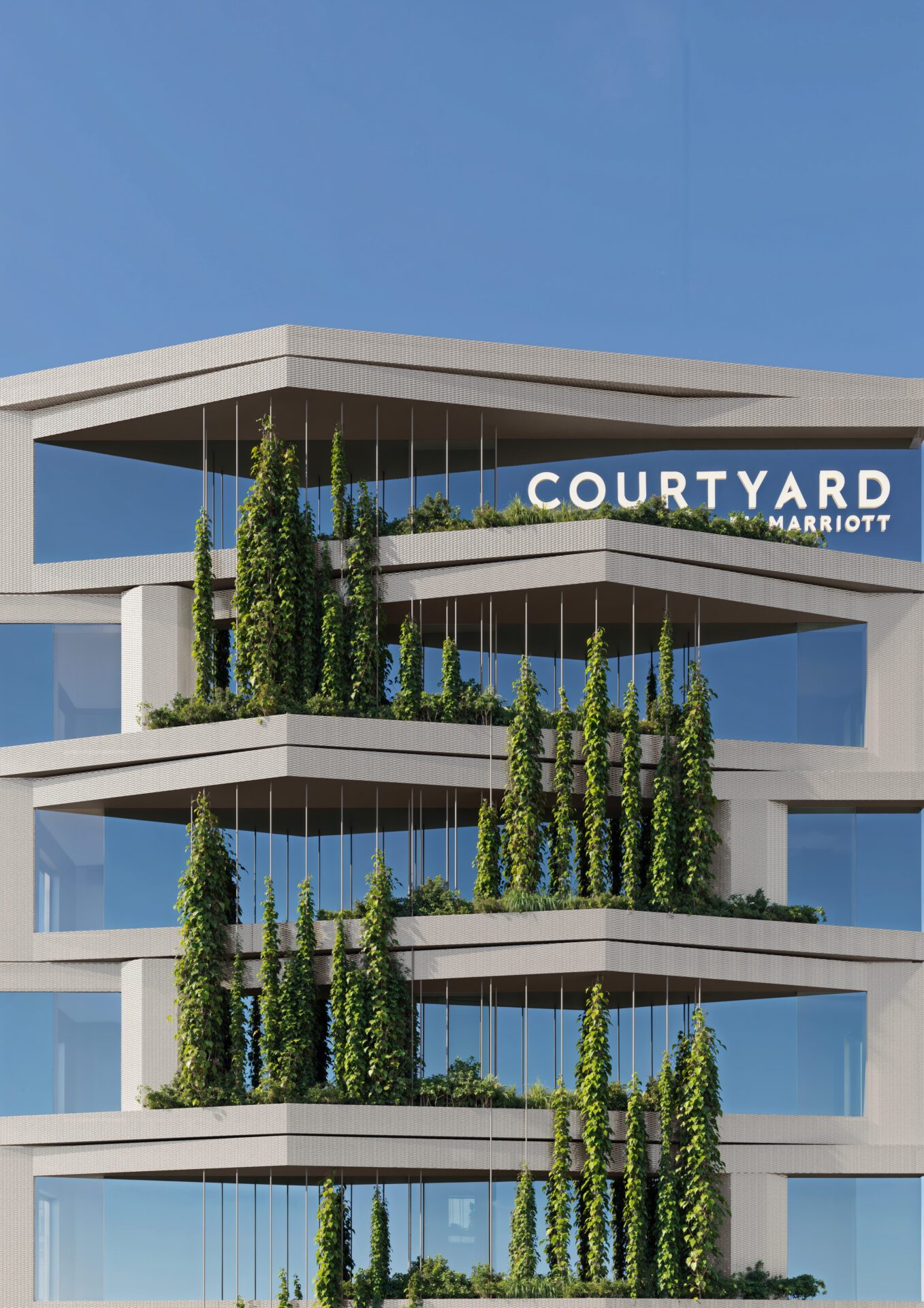
The horizontal lines of the hotel exterior weave back and forth around the standing columns. The effect is an intertwining facade that keeps on triggering the viewer’s attention from different angles. In fact, the outside-facing walls have a subtle difference from the ones facing the campus. These styles meet at the side walls, where they blend and create a new, vibrant pattern.
Green and aluminium cladding
To add to the organic feel of the Marriott Hotel, cut-out aluminium is used as facade cladding. The raster of bent metal reflects the clouds and skies above, altering its appearance throughout the day and the seasons. The mesh size increases with the height of the building, so the wavy pattern remains noticeable to the top.
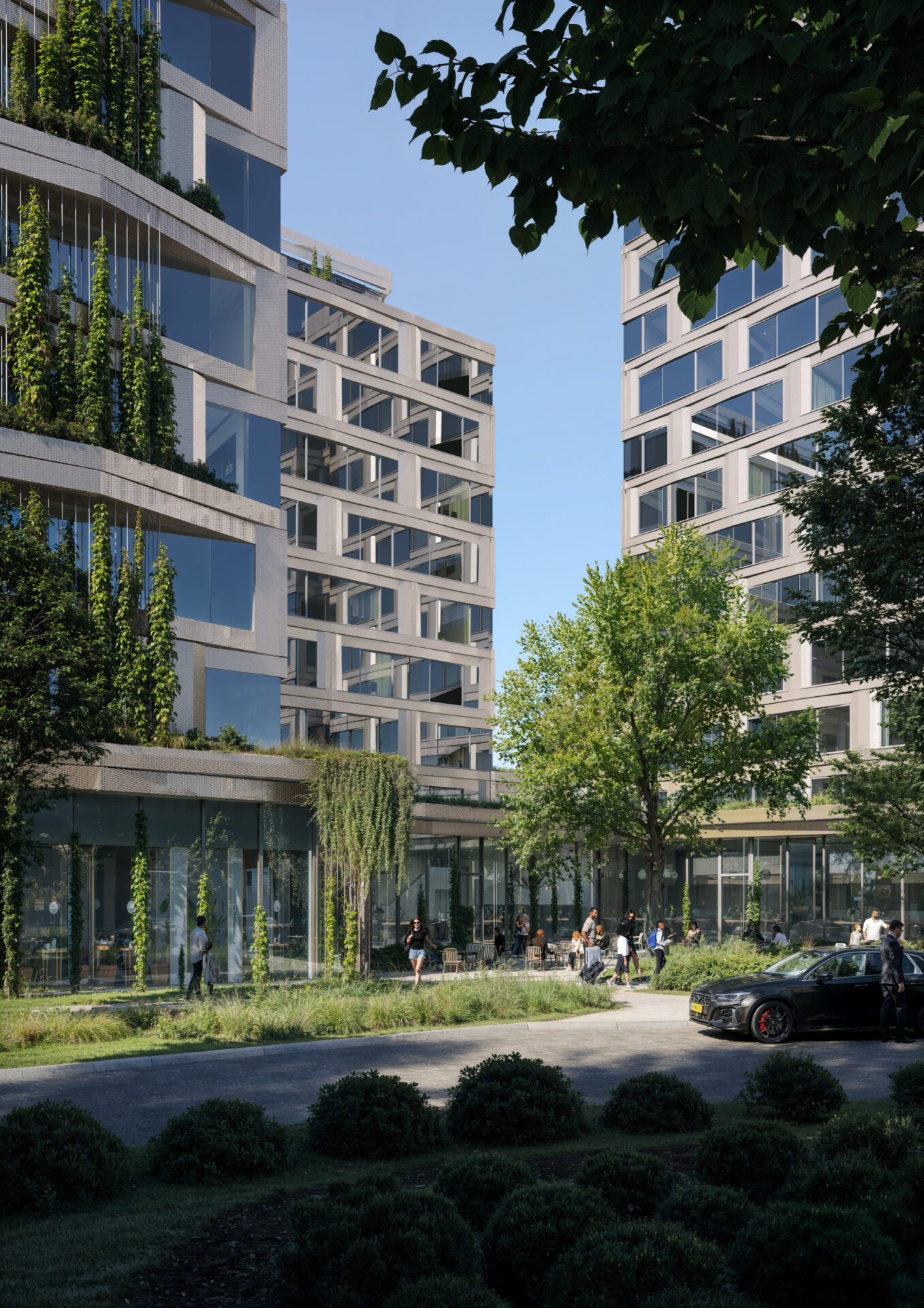
When approaching the campus, the side walls of the hotel are the first thing to catch the eye. In order to lure people into the green zone behind it, it’s key that the front feels just as organic. Plants climb up along stainless cables, in an alternating rhythm that follows the weaving of the facade. Flanking the three hotel entrances, downward-growing plants hang from the balconies above. The flowering vegetation is combined with bird nesting facilities. The building attracts falcons, sparrows, bats, and a wide range of insects, creating a self-supporting, healthy ecosystem.
Overall wellbeing
Behind the green curtain of climbing plants, the hotel gym directly above the main entrance is visible. Seeing an active lifestyle acts as a reminder that the Health Innovation Campus Boxmeer stands for overall wellbeing. If this campus is home to groundbreaking research for innovative healthcare solutions, then every corner and every detail should make you feel better. Can you imagine a better entrance than walking through a state-of-the-art hotel full of natural elements that showcase the biodiverse ambitions of the campus? Neither can we. Welcome to The Marriott International Hotel in Boxmeer.